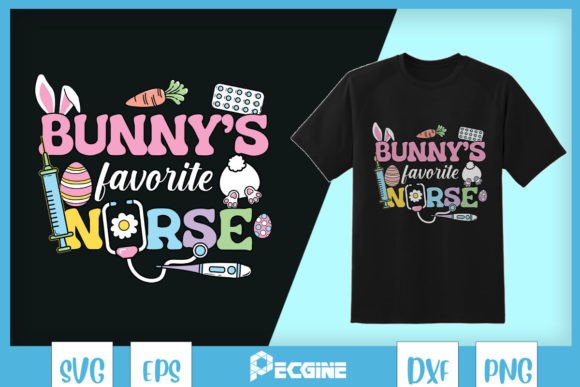
Bunny s Favorite Nurse SVG: An Embroidery Design Review
I pulled up Bunny s Favorite Nurse SVG on my screen late last night, prepping for a custom tote bag order a client needed by Friday. The request was simple but specific: something sweet, professional, and clearly nurse-themed for a pediatric nurse who just finished her first year on the floor. The moment I saw this design, I knew it had the right personality. Soft, approachable, and just the right amount of charm without tipping into overly cutesy territory.
When you work with embroidery files day in and day out, you develop a quick instinct for which designs will actually stitch out well and which ones only look good on a screen. Bunny s Favorite Nurse SVG falls into the first category. The composition is clean, the shapes are distinct, and the overall layout feels balanced. Those are the things I look for before I ever load a design into my software.
First Impression: What This Design Communicates
There is something immediately warm about this artwork. The bunny motif softens the professional medical theme, making it feel personal rather than institutional. I could instantly picture this on a children's hospital volunteer shirt, a nursing school graduation gift, or a cozy sweatshirt for a home health aide. The mood is gentle, encouraging, and quietly celebratory.
From a design perspective, the visual weight sits comfortably in the center, which makes it versatile for placement on everything from tote bags to baby onesies. The lines are deliberate without being overly busy, and the theme reads clearly even at a glance. That matters when you are selling at a craft fair where customers are scanning tables quickly. A design needs to register in seconds, and this one does.
Thinking Through Real Embroidery Use
I loaded the SVG into my design software without any fuss. The file came pre-sized, which saved me a few minutes of adjusting proportions. That is a small but meaningful detail when you are batch-prepping files for a weekend production run. The PNG version with its transparent background also proved useful for creating a quick mockup to send to the client before stitching. She approved it within the hour.
For the actual embroidery, I started thinking through thread choices. The bunny shape calls for soft, plush tones. I landed on a warm cream for the bunny body, a gentle pastel accent for any uniform details, and a subtle contrast thread for the nurse-themed elements. The key was keeping the palette tight and intentional. Too many colors, and the design loses its quiet charm. Too few, and it risks looking flat on textured fabric.
Fabric and Product Pairings That Make Sense
Not every embroidery design works on every surface. I have learned that lesson the hard way, usually around 2 a.m. with a seam ripper in hand. With Bunny s Favorite Nurse SVG, the medium level of detail opens up a nice range of suitable products. Here is where I would confidently use it:
- Custom sweatshirts for nursing staff appreciation weeks
- Tote bags with a canvas weave that holds stitches cleanly
- Baby onesies for a newborn with a nurse parent
- Pillow covers as a thoughtful personalized gift
- Kitchen towels for a nurse who loves to cook
- Embroidered patches to attach to scrub caps or jackets
- Nursery decor pieces with a medical-family theme
- Holiday gifts for the healthcare workers in your life
I also considered how this would perform on aprons for a nurse who bakes, or on a cap for someone who works in pediatrics. The curved surface of a cap always demands extra attention. The design needs to maintain its readability across that curve. In this case, the centered layout and moderate level of detail should hold up well, as long as the hoop size accommodates the design without forcing it too close to the brim.
Where I Would Proceed With Caution
Experience has taught me to identify the tricky spots in any design before committing thread to fabric. With Bunny s Favorite Nurse SVG, here is where I would slow down and test carefully:
- Small hoop sizes under 4x4 inches may compress the finer details and make stitch definition muddy
- Stretchy fabrics like thin jersey or ribbed knit require extra stabilizer and possibly a topper to prevent shifting
- Dark fabrics demand thoughtful thread color selection so the design does not disappear into the background
- Thin or delicate fabrics such as lightweight cotton lawn may pucker if the stitch density is not adjusted
- Layered garments with seams running through the embroidery area need careful hooping to avoid distortion
- Frequently washed items need a solid stabilizer strategy and possibly a cover stitch to protect the detail
I would also recommend testing the design at the intended size on a scrap of the actual fabric before running it on the final product. That is not a critique of this particular design. It is simply good embroidery practice that I apply to every single file I use, whether I paid for it or created it myself. A quick stitch-out on a similar fabric weight and color reveals issues that no amount of screen previewing can catch.
What I Noticed About Detail and Stitch Friendliness
The design has a nice balance between open areas and detailed sections. That matters because embroidery files with overly dense, chunky fills can feel stiff and heavy on the finished product. Nobody wants a shirt that feels like a cardboard panel on their chest. With Bunny s Favorite Nurse SVG, the shapes break up naturally, which suggests that the stitch flow will be smooth and the fabric will retain its drape after embroidery.
I also appreciate that the design does not rely on tiny, fragile lettering or impossibly thin outlines. Those are the first things to snag, fray, or blur after a few washes. A design that holds up over time earns repeat customers and better reviews. That is the kind of thinking that separates a polished handmade product from something that looks amateurish after one laundry cycle.
Customer Perception and Product Value
When I think about how a buyer would react to a finished product featuring Bunny s Favorite Nurse SVG, a few things come to mind. First, the design feels intentional. It does not look like a generic clip art file that got dropped onto a shirt. It reads as a thoughtful choice, which increases the perceived value of the item. That matters for pricing. A well-chosen embroidery design on a quality blank can command a higher price point than a random graphic slapped onto a cheap tee.
Second, the bunny-and-nurse combination hits a specific emotional chord. It speaks to nursing professionals who want to celebrate their work without being overly serious. It also appeals to gift buyers who want something sweet and personal for a nurse in their life. That dual appeal broadens the customer base for anyone selling finished products with this design.
Third, the design has a gentle, almost timeless quality. It is not trend-chasing or overly stylized in a way that will feel dated next year. For an Etsy seller or small shop owner building a brand around heartfelt, quality products, that consistency is valuable. You want designs that can stay in your catalog, not ones you have to retire after a season.
Practical Notes for Craft Business Owners
Before adding any design to my production workflow, I run through a mental checklist. Here is how that played out with this particular file:
- Test stitch first. Always. No exceptions. I ran mine on a midweight cotton canvas scrap to check tension and coverage.
- Thread color contrast. I tested a light thread on dark fabric and a slightly darker thread on light fabric. Both worked, but the contrast level shifted the mood significantly. Lighter-on-dark felt more whimsical. Darker-on-light felt more classic.
- Stabilizer selection. On a tote bag, I used a medium-weight cutaway stabilizer. On a sweatshirt, I added a water-soluble topper for the fleece nap. The design details stayed crisp in both cases.
- Mockup in black and white. This is a trick I use to check if a design holds up purely on shape. Stripping the color lets me see if the composition reads clearly. This one passed.
- Check licensing. I always confirm whether a design is cleared for commercial use on finished products before listing anything in my shop. That is a conversation every seller needs to have with the file provider.
The PNG file included in the download was a nice bonus for creating product mockups. I used it to generate a clean preview image for my client, showing the design on a cream-colored tote bag. The transparent background made the mockup process seamless. The DXF format gives additional flexibility for those who work across different software platforms or want to use the design in cutting applications. For my embroidery workflow, the SVG was the primary file I needed, and it imported smoothly.
Who This Design Is Really For
If you are an embroidery designer creating custom apparel for healthcare workers, this file belongs in your collection. If you run a small handmade shop and want to add a nurse-themed product that feels personal and warm, this design fits. If you are a hobbyist making a one-off gift for a friend who just passed their nursing boards, this will do exactly what you need it to do.
It also works well for baby embroidery projects where the nurse theme connects to a parent's profession. A tiny onesie with this design stitched on the chest or a small bib with the bunny placed near the corner would make a memorable gift. The scale is adaptable enough to work across those varied applications, as long as you stay mindful of the minimum size where the details remain legible.
For craft business owners who sell at markets or through online listings, this design offers strong giftability. Nurse appreciation gifts are a steady category with consistent demand. Having a design that handles that niche with warmth and quality sets your product apart from the mass-produced options that flood the market.
Final Thoughts Before You Stitch
After working with Bunny s Favorite Nurse SVG across a few test pieces and the final client tote, I can say this is a design I would reach for again. It stitches out cleanly, adapts well to different fabric types when you use the right stabilizer, and produces a finished product that looks professional and thoughtful. The file quality was solid, the import was smooth, and the design itself has a clear point of view.
I would recommend this to anyone who needs a nurse-themed embroidery design that leans sweet rather than clinical. It works beautifully for personalized gifts, boutique product lines, and small-batch production. Just take the time to test your thread palette, choose your fabric wisely, and dial in your stabilizer. The design will do the rest.